
Hip stem
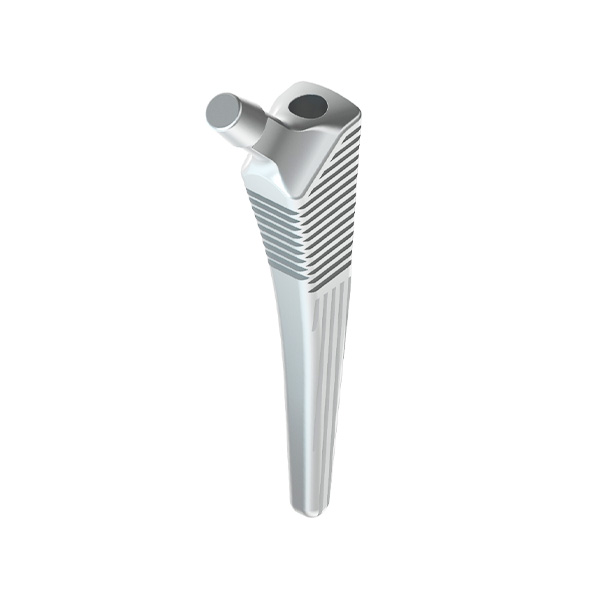
Engineering the Biomechanical Anchor: Hip Stem Machining
A hip stem is more than just a piece of medical-grade metal; it is a high-performance interface that must survive millions of loading cycles within the human femur. In the world of THR manufacturing (Total Hip Replacement), achieving the perfect balance between structural durability and geometric exactness is the ultimate goal.
Why Hip Stem Production is High-Stakes Engineering
Machining a femoral stem presents a "perfect storm" of manufacturing hurdles. To deliver an implant that ensures long-term patient success, manufacturers must navigate three core challenges:
- Biomorphic Geometry: To mimic human anatomy, stems require complex 3D contours and tapered transitions. This necessitates stable, simultaneous multi-axis tool paths.
- Abrasive Materials: Most stems are forged from Ti-6Al-4V (Titanium) or Cobalt-Chromium (CoCr). These alloys are biocompatible but notoriously difficult to machine, due to low thermal conductivity and high work-hardening rates.
- Micron-Level Tolerances: Interface zones, specifically the neck and taper, leave zero room for error. A deviation of a few microns can lead to implant failure.
Technical Comparison: Material Machinability
| Material | Key Property | Machining Challenge | Tooling Requirement |
| Ti-6Al-4V | High strength-to-weight | Heat concentration at the edge | Sharp, polished flutes |
| CoCr Alloys | Extreme wear resistance | Accelerated abrasive tool wear | Advanced PVD coatings |
| 3D Printed Ti | Near-net-shape | Variable hardness/interrupted cuts | High edge toughness |
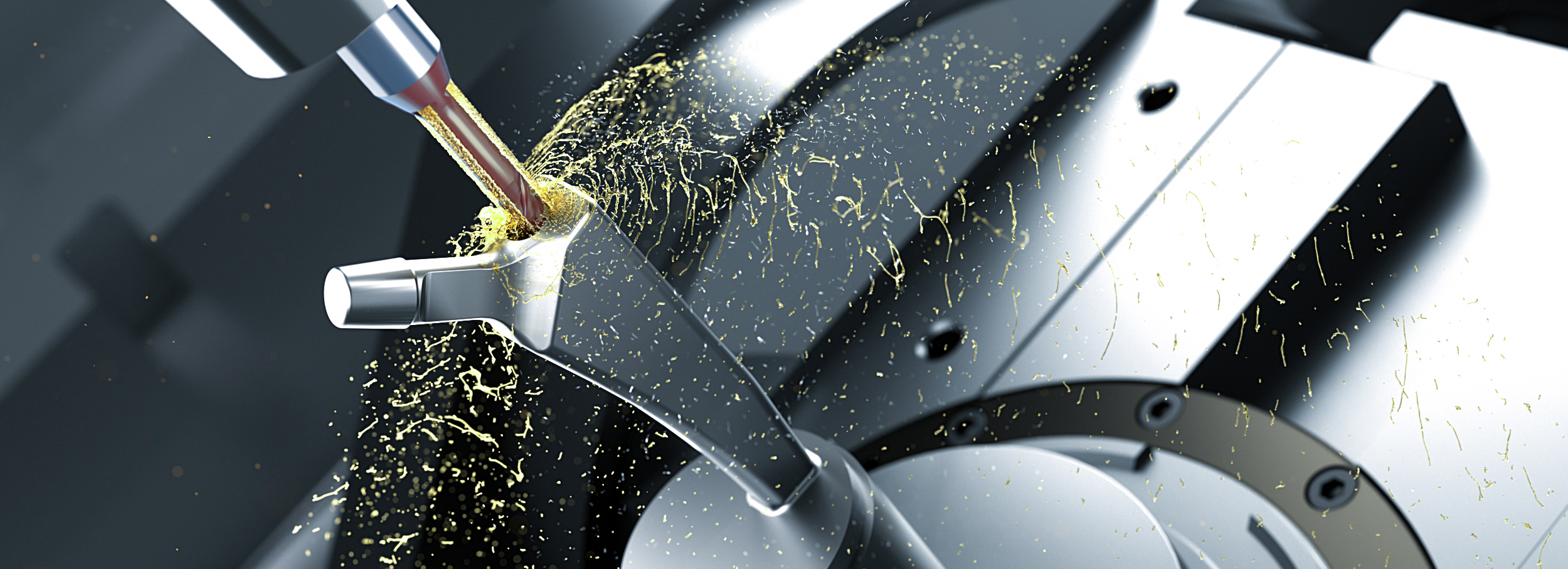
The Precision Workflow: From Roughing to Finishing
Phase 1: Heavy Material Removal (Roughing)
The initial stage focuses on carving the primary form from a blank. The priority here is bulk removal without inducing thermal stress or vibration.
- Strategy: Utilize high-performance cutters that promote controlled chip formation.
- Goal: Establish a consistent stock allowance for the high-precision stages that follow.
Phase 2: Geometry Refinement (Semi-Finishing)
This stage "levels the playing field." By refining the wall thickness and smoothing the transitions, we ensure the final finishing tools encounter a predictable environment. This is critical for maintaining the structural integrity of the stem's neck.
Phase 3: Femoral Stem Taper Machining (The Morse Taper)
The Morse taper is perhaps the most critical feature in the entire Hip Replacement system. This friction-fit connection between the stem and the ball head must be flawless to prevent "fretting corrosion" (micro-movements that degrade the metal).
Technical Requirement: Femoral stem taper machining must achieve absolute generatrix straightness, extreme angular accuracy and strictly defined surfaces. Profiled tapered endmills with defined micro-geometries minimize cutting pressure to prevent deflection during this final, high-accuracy pass and to achieve the desired surface profile.
Phase 4: Functional Surface Finishing
The final texture of the stem dictates how it will interact with bone or cement. Whether the stem requires a high-polish finish or a specific roughness for hydroxyapatite coating, the machined substrate must be pristine.
- Benefit: Precise control over surface integrity improves fatigue resistance and ensures the implant lasts for decades.
Driving Efficiency in THR Manufacturing
In today's competitive landscape, precision isn't enough—you need throughput. Our specialized tooling platforms are engineered to integrate into automated CNC cells, offering:
- Reduced Cycle Times: Faster material removal in Ti and CoCr.
- Predictable Tool Life: Essential for lights-out manufacturing and scaling production.
- Regulatory Readiness: Validated processes that meet the stringent requirements of medical device auditing.
Do you need any advice from us? Contact us here!