
Tailor-made solid carbide tools
Engineering high-performance custom cutting solutions
When standard catalogue geometries fail to deliver a clean, consistent, or cost-effective finish, special solid carbide tools provide the ultimate engineering remedy. Whether your production bottleneck stems from a difficult-to-machine alloy, a complex component micro-feature, an aggressive cycle time target, or the need for a multi-tasking cut, the objective remains straightforward: design a specialized tool geometry around the application rather than forcing your process to fit a standard profile.
As a global benchmark in high-precision carbide tooling, Mikron Tool combines decades of engineering know-how with advanced manufacturing to turn your unique challenges into optimized production outcomes. This page explores how to specify, engineer, and request custom round tools designed explicitly for your manufacturing environment.
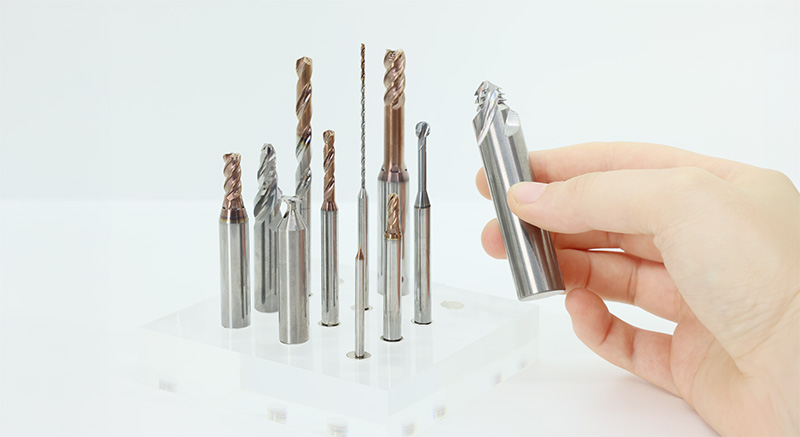
Why invest in custom cutting solutions?
Standard tooling may require compromises such as extra passes, unstable chip accumulation, burr formation, or premature wear. Custom solid carbide tools eliminate these variables by building every design parameter around your specific component, material, machine tool, and productivity goals.
Core benefits of special carbide tooling:
- Workflow and inventory rationalization: Consolidate multiple standard tools into a single purpose-built asset.
- Drastic cycle time reductions: Execute multi-step operations in one smooth feed pass.
- Enhanced dimensional precision: Maintain tight tolerances with minimal tool deflection.
- Process stability and predictability: Prevent chatter and improve chip evacuation in deep or restricted features.
- Minimized setup and changeover downtime: Reduce the number of tool pockets and calibration offsets used per job.
- Scrap and secondary operation elimination: Drastically cut expensive waste in small-batch and high-volume runs alike.
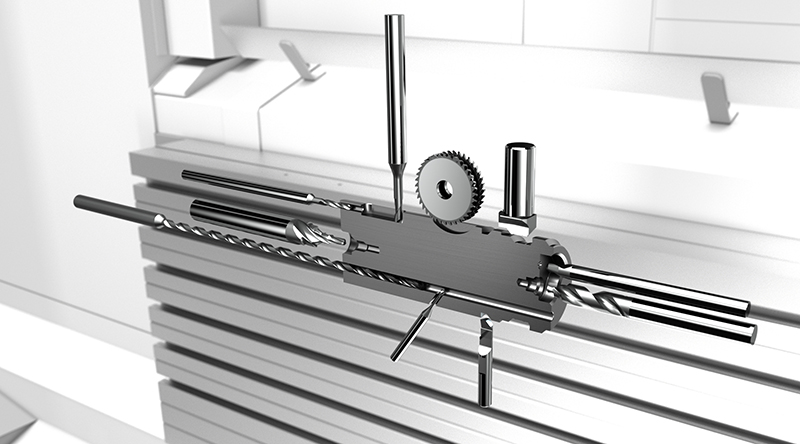
Engineered around your part, not a catalogue compromise
Transitioning from a standard tool to a bespoke solid carbide tool means establishing total control over the machining dynamics. Every custom design project maps specific geometric traits directly to your desired machining outcome:
- Cutting diameter & pilot geometry: Tailored to exact hole dimensions, internal profiles, or specialized features.
- Tip angles, corner radii & step transitions: Configured to match component shapes precisely and eliminate redundant tool passes.
- Flute count, length & helix angles: Balanced to optimize chip flow, core rigidity, and feed capability.
- Overall reach & free length: Designed with optimal overhang to prevent chatter and maintain structural rigidity.
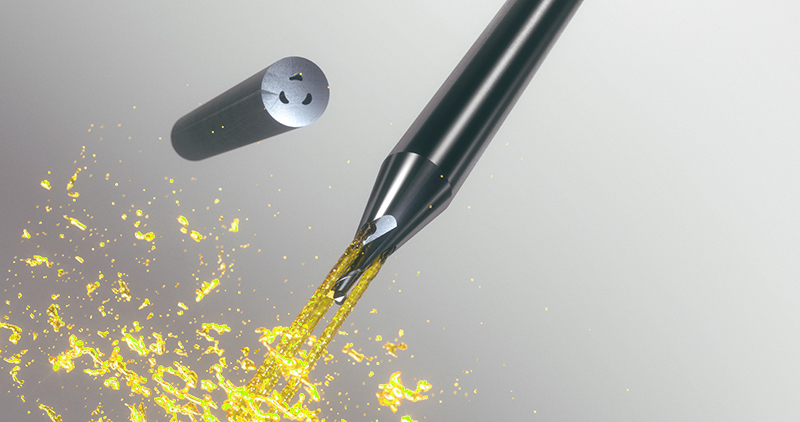
- Coolant strategy: Internal straight or helical channels, special exit ports through the flutes, or optimized external supply to flush heat away from deep pockets.
- Coating & edge preparation: Selected specifically for the workpiece behavior, wear characteristics, and required surface finish.
- Carbide substrates: State-of-the-art carbide grades built to sustain higher cutting speeds and feed rates.
- Shank architecture & clamping length: Engineered for runout control and maximum spindle stability (compliant with DIN 6535 HA, HB Weldon, HE Whistle Notch, or custom turning clamping faces).
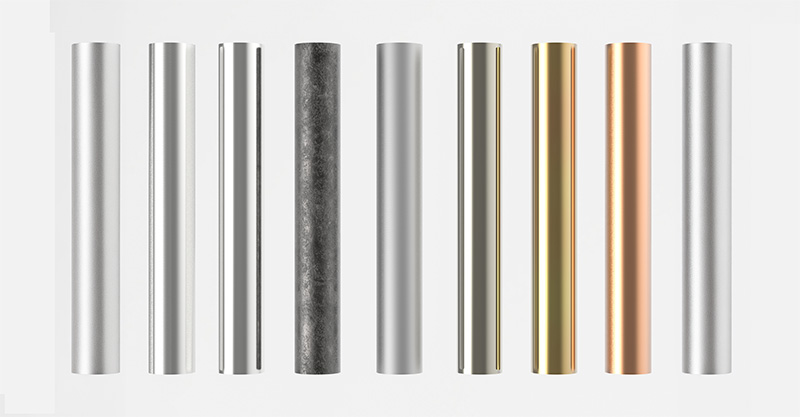
Challenging workpiece materials handled with ease
Material behavior heavily dictates tool design. Our custom engineering solutions are built to master materials characterized by low thermal conductivity, high toughness, or extreme ductility:
- Stainless steels and corrosion-resistant alloys
- Titanium and titanium-based alloys
- Heat-resistant superalloys (Inconel, Hastelloy, Waspaloy)
- CoCrMo (Cobalt-Chrome-Molybdene) alloys
- Hardened steels up to 55 HRC
- Non-ferrous metals (aluminum alloys, brass, lead-free brass, copper, gold, etc.)
- Cast iron and special foundry materials
Coolant supply options and shank configurations
Every custom cutting tool can be tailored to match your exact machining application and existing machine setup. We offer flexible coolant delivery configurations designed to maximize chip evacuation and thermal control:
- Straight internal coolant ducts integrated directly into the shank
- Straight internal coolant channels running through the tool body
- Helical internal coolant channels for optimized flute cooling
- Custom exit internal coolant channels (such as exits directed through the flutes)
- External coolant supply compatibility
Mikron Tool engineers bespoke round tools around each customer’s exact operational specifications. Our custom solid carbide tools can be manufactured with a wide variety of shank styles:
- Cylindrical shanks compliant with DIN 6535 HA
- Weldon shanks compliant with DIN 6535 HB
- Whistle notch shanks compliant with DIN 6535 HE
- Flat clamping faces designed for turning operations
- Custom shank geometries produced upon request
Comprehensive custom tooling options for demanding sectors
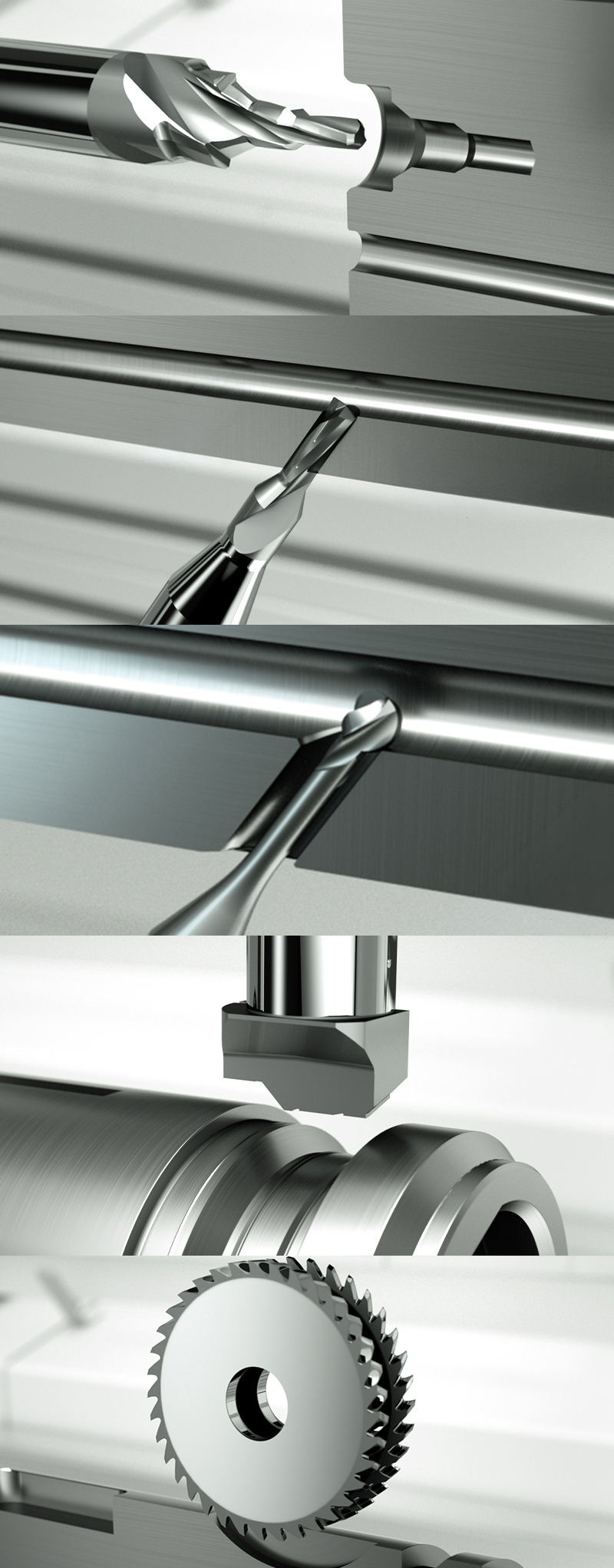
Mikron Tool develops a vast portfolio of special solid carbide tools optimized for specialized applications across medical, aerospace, automotive, and watchmaking industries:
- Custom milling cutters: Form milling, profile milling, slotting, contouring, and finishing for thin walls and restricted-access pockets (including special disc milling cutters and profile disc cutters).
- Special drills & pilot tools: Center drills, step drills, pilot drills, and complex form-drilling solutions.
- High-precision reamers: Step reamers and form reamers designed for unmatched roundness and dimensional accuracy.
- Chamfering & deburring tools: Purpose-built geometries to ensure edge cleanliness and zero burrs.
- Turning & grooving tools: Profile turning, custom grooving, and combined turning solutions.
- Multi-Functional tools: Advanced geometric fusions that merge multiple operations into a single continuous cut (e.g., Centering + Drilling, Centering + Drilling + Reaming, Drilling + Reaming, Drilling + Form Drilling, or Milling + Deburring).
A collaborative and practical customization process
Developing a successful custom tool starts with your part feature and works backward to the cutting edge. You do not need a fully realized blueprint to begin; sharing your application challenge, desired finish, and machine limitations is enough to start.
- Application Review: Definition of the feature, workpiece material, machine spindle condition, coolant parameters, batch size, and current process pain points.
- Tool Concept: Selecting the optimal tool architecture (special drill, end mill, reamer, or multi-functional tool).
- Geometry & Substrate Selection: Fine-tuning profiles, helix designs, coatings, and carbide grades.
- Quotation & Technical Proposal: Pricing based on design complexity, volume, and documentation requirements.
- Manufacturing & Validation: Production followed by rigorous quality checks against the agreed design for immediate deployment under shop-floor conditions.
Engineered for measurable production value
A custom cutting tool should justify its place on the shop floor through tangible performance gains. Investing in bespoke tooling makes sense when it minimizes process uncertainty, consolidates machining sequences, boosts part-to-part consistency, safely accesses hard-to-reach geometries, or stabilizes challenging workpieces. True value comes from solving a specific production bottleneck, not simply from having a non-standard cutter.
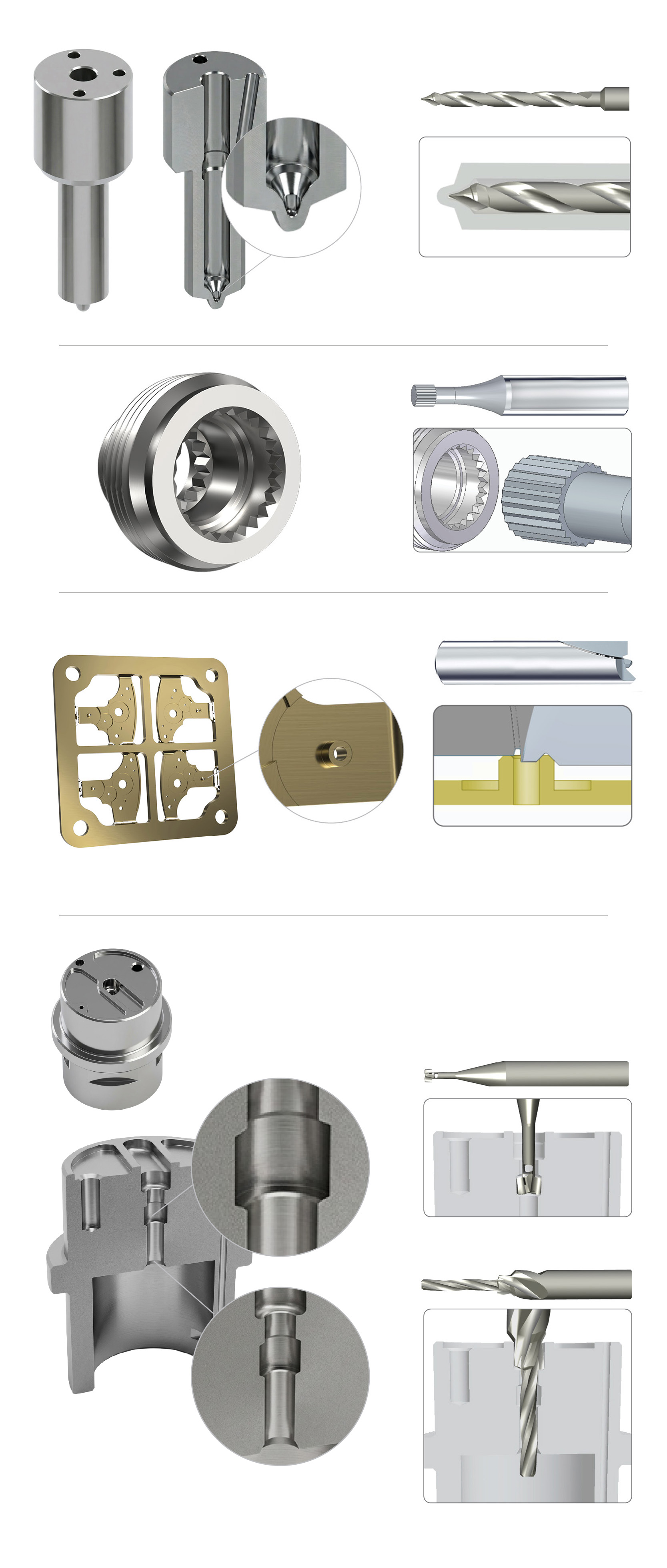
For instance, imagine a component that currently requires separate drilling, chamfering, and finishing operations to complete a single bore. Where machine setups permit, a custom solid carbide step tool can drill, finish, and chamfer in one seamless pass, cutting down on tool changes and streamlining CNC programming. Similarly, if a standard long-reach tool suffers from vibration and chatter, a custom geometry engineered with only the exact reach required significantly enhances rigidity and chip evacuation.
Because performance gains depend heavily on your specific setup, tooling decisions should always be backed by real machining data and testing. Instead of asking, "What is the most complex tool available?" the better question is, "Which tool geometry makes this component cleaner, faster, and more repeatable to manufacture?"
How to submit your custom tooling request
Providing clear, practical application data upfront ensures an accurate engineering recommendation and faster turnaround on custom solid carbide tooling quotes. Eliminating guesswork early leads directly to a more reliable, cost-effective solution.
When submitting an inquiry, include as many of the following details as possible:
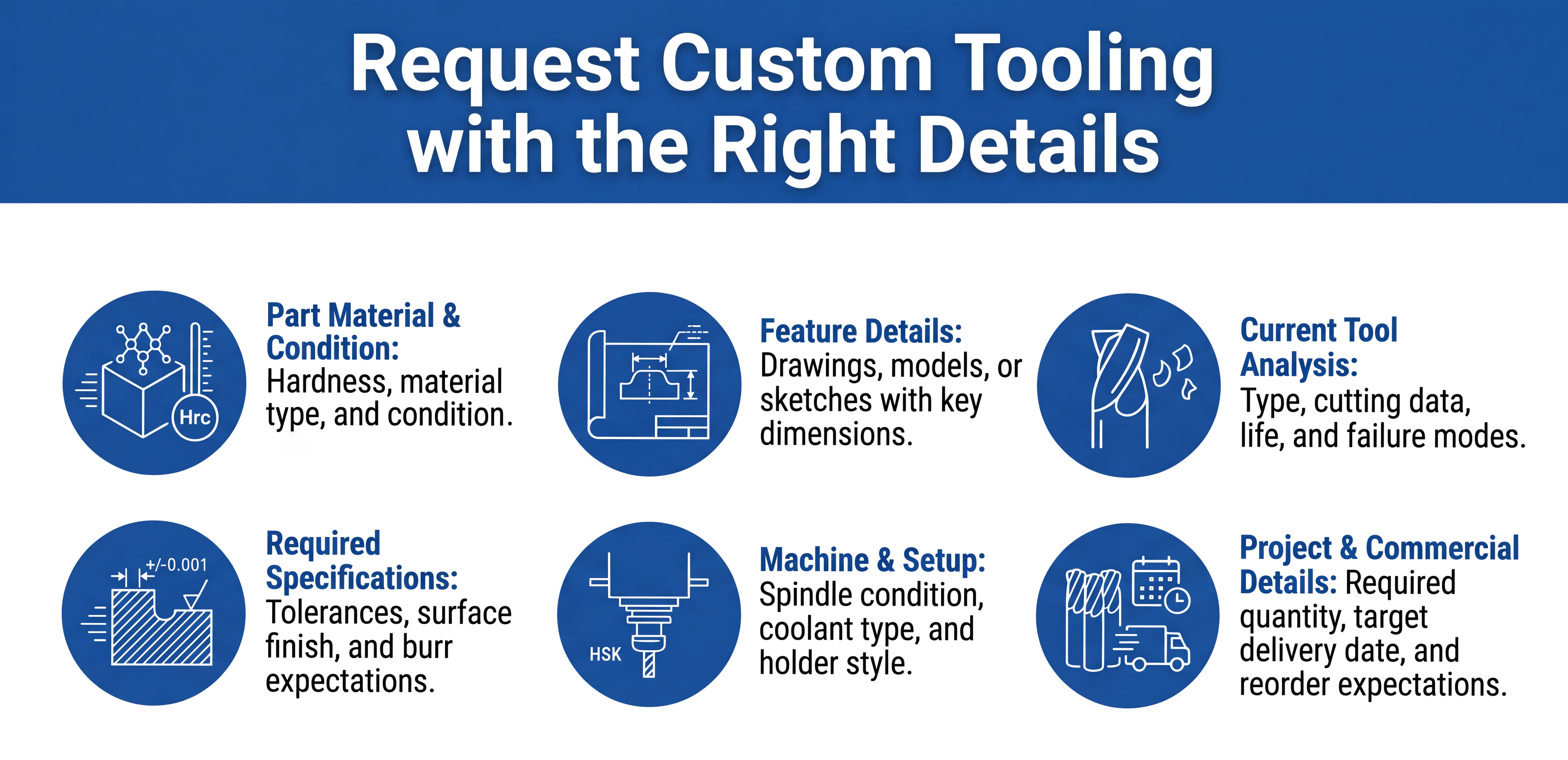
If you are uncertain which cutting geometry best fits your operation, focus on describing the machining challenge rather than specifying a tool type. Share your part requirements, machine constraints, and production targets with our engineering team to request a tailored quotation built around your application.
Are you facing challenges in your machining operations?
Contact us and let’s discuss your application to find the right solution.
Frequently Asked Questions (FAQs)
1. What are custom solid carbide tools, and when should I implement them?
Custom solid carbide tools are precision-engineered cutting tools built specifically for complex manufacturing challenges that standard off-the-shelf options cannot resolve economically or consistently. You should deploy them when facing difficult-to-machine materials, tight dimensional tolerances, restricted access points, or when combining multiple machining steps into a single pass to slash cycle times.
2. What application fields are covered by Mikron Tool’s custom range?
Our custom engineering covers an extensive array of machining disciplines, including specialized milling (form, profile, slotting), high-precision centering and pilot drilling, step drilling, reaming, deburring, chamfering, profile turning, grooving, and highly integrated multi-functional cutting tools.
3. Which challenging materials can be machined using these custom solutions?
Mikron Tool designs custom carbide tools specifically to combat rapid tool wear in tough materials, including stainless steels, titanium, Inconel and other heat-resistant superalloys, CoCrMo medical alloys, hardened steels up to 55 HRC, non-ferrous metals (aluminum, brass, copper), and various cast irons.
4. How do multi-functional custom tools optimize production costs?
Multi-functional tools merge sequential operations, such as centering, drilling, and reaming, into one tool body. This eliminates redundant tool changes, reduces secondary fixture setups, shrinks CNC programming complexity, and dramatically improves overall process stability.
5. What shank and cooling configurations are available for custom round tools?
Special tools can be designed with straight internal coolant shafts, internal helical channels, specialized exits through the flutes, or external coolant connections. Shank styles comply with DIN 6535 standards (HA, HB Weldon, HE Whistle Notch), turning tool clamping faces, or specialized designs upon request.
6. What information is required to request a tailored tool quotation?
To accelerate your custom tooling request, provide the part material and hardness, a 2D drawing or 3D model with key feature dimensions, target tolerances and surface finish expectations, your current cutting data and failure modes, machine spindle, holder specifications and expected batch volumes.