
Tibial Compression Plates
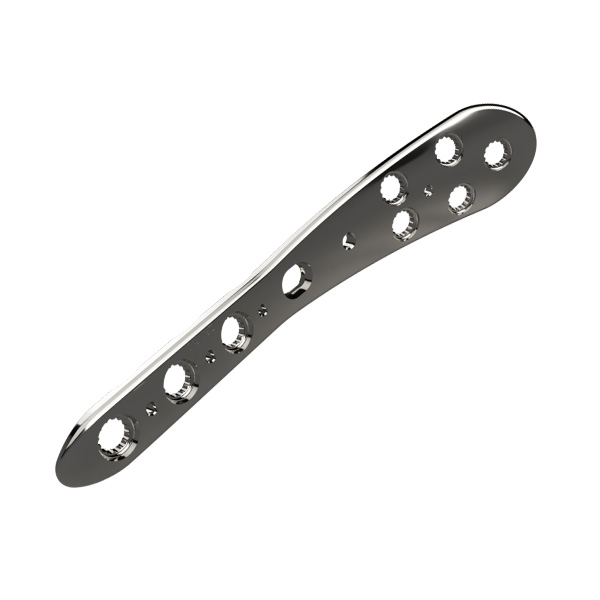
High-Precision Machining Solutions for Tibial Compression Trauma Plates
Producing tibial compression plates represents one of the most sophisticated challenges in orthopaedic manufacturing. Designed to stabilize complex fractures in the upper tibia - a region subjected to extreme biomechanical loading - these devices require intricate anatomical contours, varying cross-sections and precise screw trajectories.
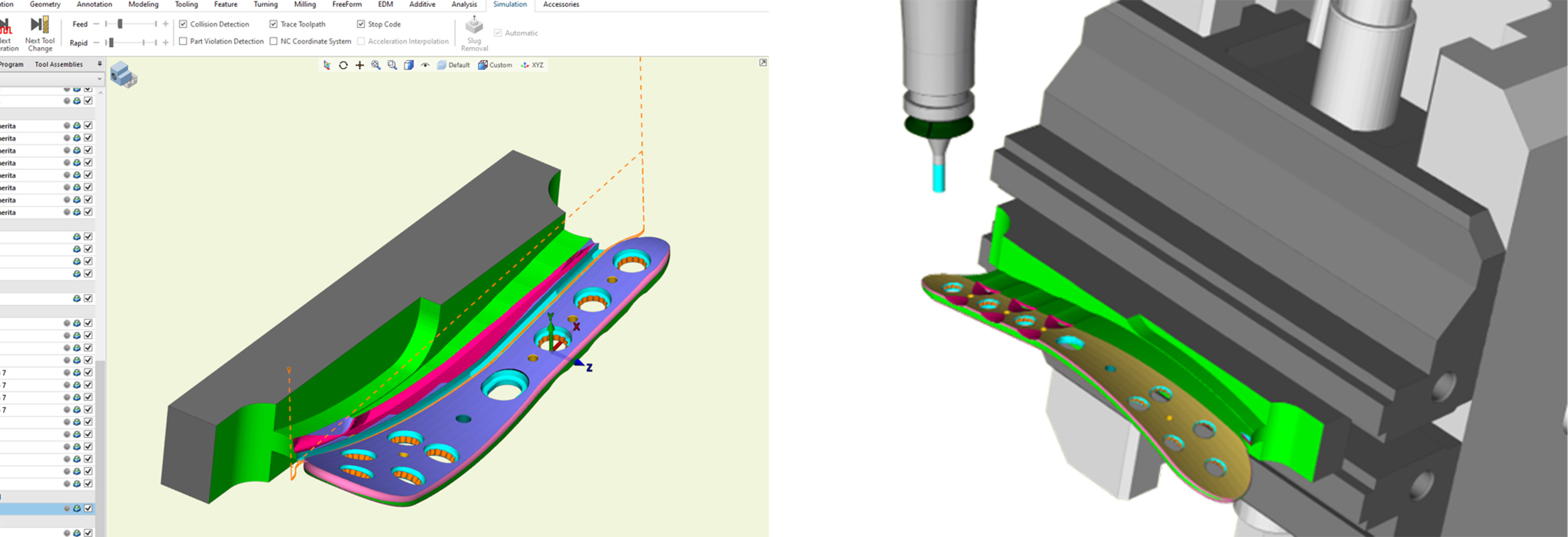
Achieving the necessary structural integrity and anatomical fit demands cutting tools engineered for extreme precision, stability and superior surface finish across biocompatible materials.
Complex Production Challenges in Trauma Plate Manufacturing
Tibial compression plates are not standard flat components; they require specialized machining strategies to overcome significant barriers to efficiency and quality:
- Multi-Planar Curvature: Machining complex, non-linear shapes to match the specific metaphyseal anatomy of the tibia.
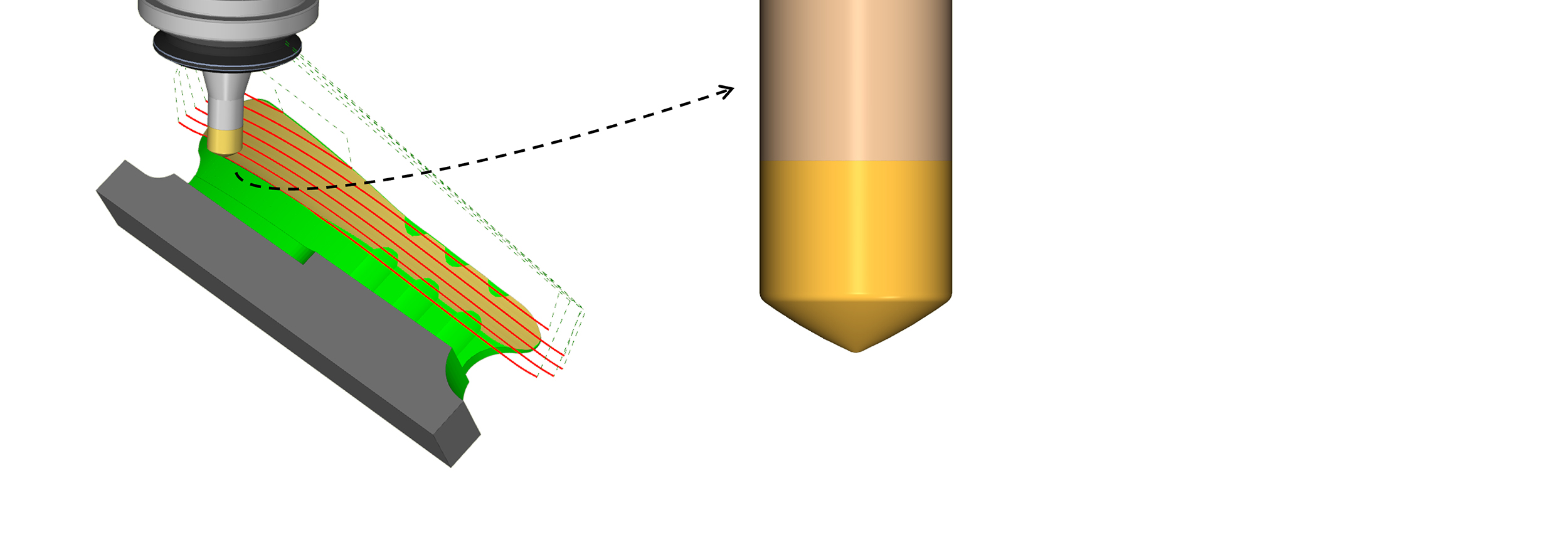
- Thin-Wall Integrity: Preventing deflection, chatter and distortion when machining delicate cross-sections designed to minimize soft-tissue irritation.
- Material Behavior: Managing extreme heat concentration and work hardening when cutting Titanium alloys (Ti-6Al-4V) and high-grade surgical Stainless Steels.
Advanced Tooling for Plate Manufacturing
The efficiency and reliability of a locking plate rely heavily on the precision of its screw interfaces. Threaded holes must feature precise positioning alignment and flawless geometry to guarantee stable fixation.
Our specialized micro-cutters are engineered to deliver:
- Burr-Free Interfaces: Elimination of burrs and surface imperfections in screw seating zones to protect screw integrity.
- Consistent Chamfering: Smooth entry surfaces for reliable intraoperative screw insertion.
Anatomical Plate Milling: Controlling Complex Surfaces
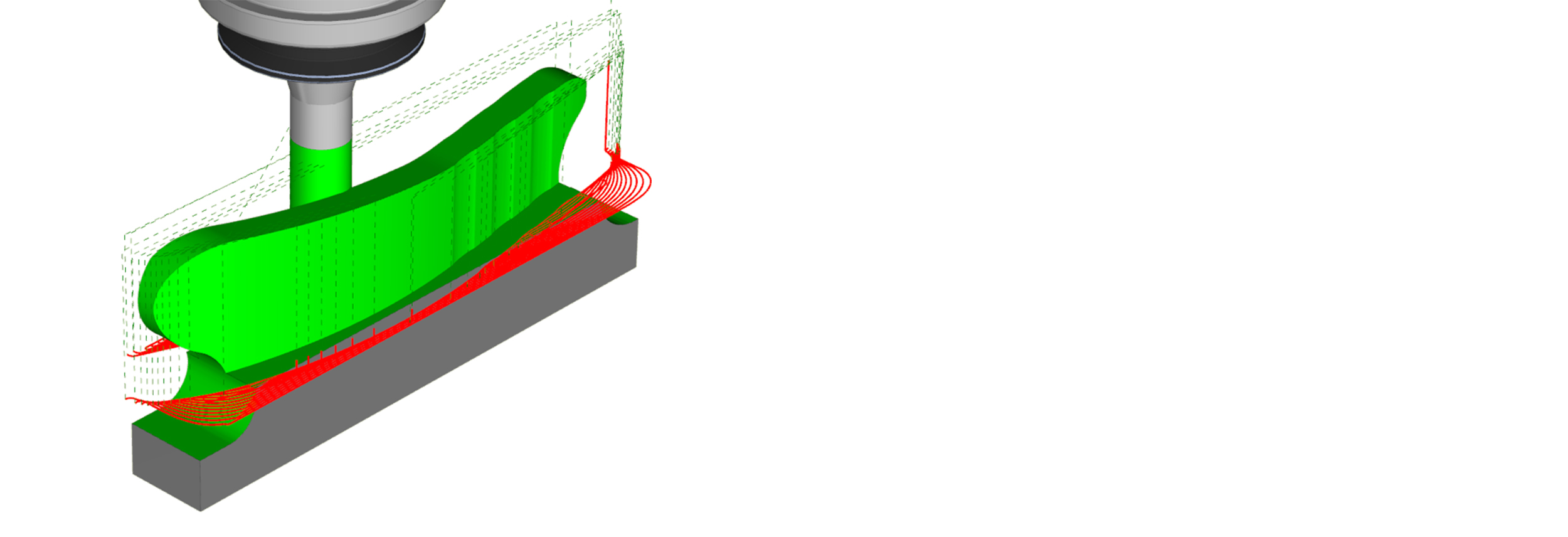
Creating the shape of a tibial compression plate requires high-fidelity anatomical milling. This process involves simultaneous multi-axis tool paths with continuously changing radii to match the bone's surface.
- Stable Cutting Forces: Optimized tool geometries prevent vibration during engagement with irregular geometries.
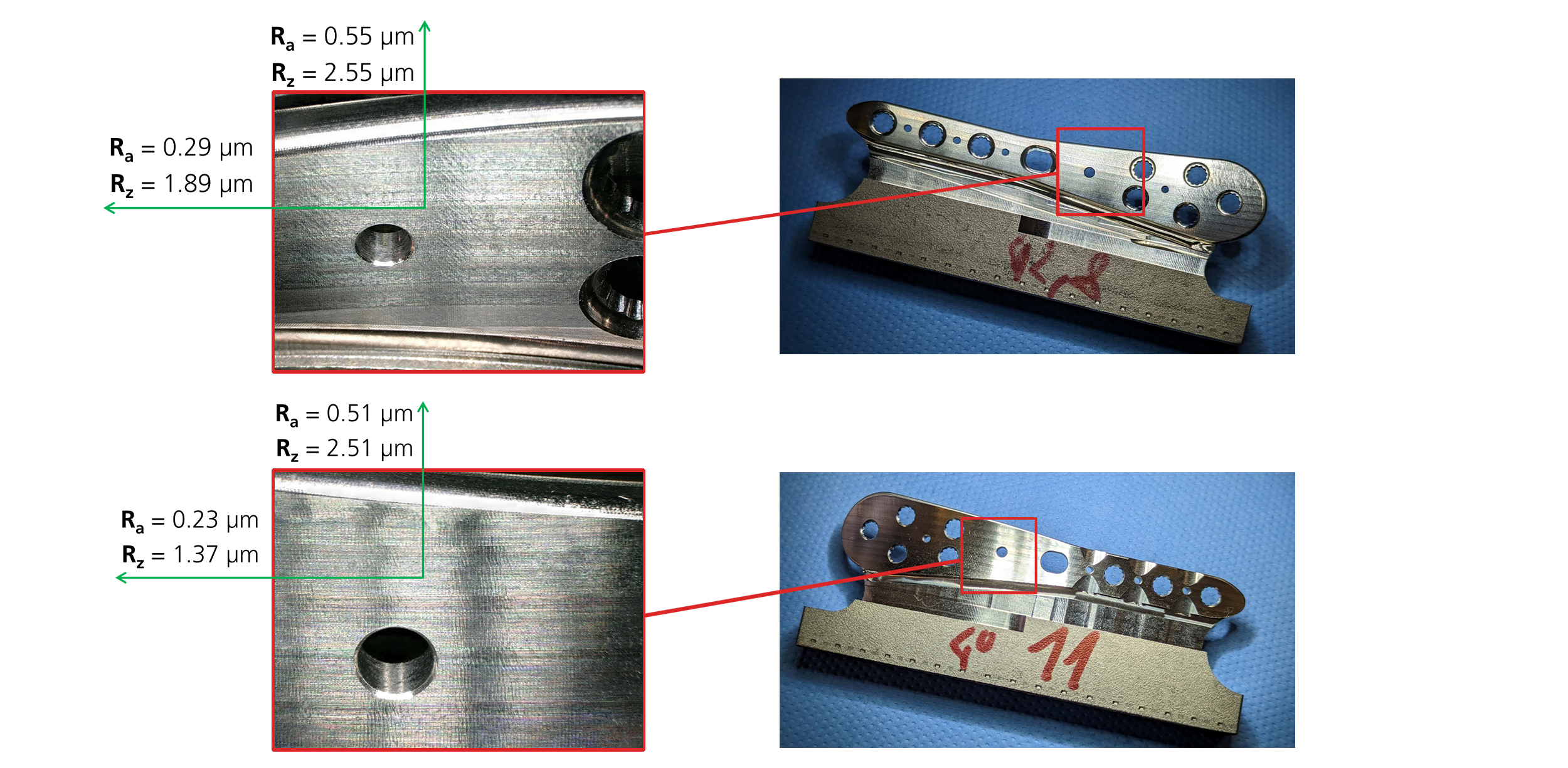
- Superior Chip Evacuation: Polished flutes manage heat buildup and prevent chip adhesion, essential when milling curved titanium surfaces to maintain surface integrity.
Stability in Thin-Wall Implant Machining
To reduce patient discomfort and soft-tissue irritation, many tibial plates feature extremely thin profiles. Machining these delicate structures without deforming the plate is a primary challenge.
- Low-Force Cutting: Tool geometries designed to reduce radial cutting pressure, preventing plate tearing, chatter or distortion.
- Dimensional Accuracy: Maintaining tight tolerances on slender components to ensure proper fracture reduction and stabilization.
Precision Hole Making and Compression Slot Manufacturing
Tibial compression plates integrate a variety of functional features, including variable-angle holes and dynamic compression slots.
- Predictable fixation: Consistent geometry ensures predictable translation and compression behavior during fixation.
- Precise locking interfaces: High-precision operations for specialized locking interfaces within the plate body.
Material Expertise and Process Reliability
Orthopaedic trauma plates demand tools that can handle abrasive materials while maintaining sharp cutting edges. Our solutions integrate
- Advanced Coating Systems: Engineered to extend tool life in Ti-6Al-4V and hardened Stainless Steel.
- Heat Management: Geometry and advanced internal cooling technology optimized for controlled heat distribution to prevent material degradation.
Partner with Us for Advanced Trauma Plate Machining
From high precision milling to thin-wall stabilization, our tooling technologies support the full lifecycle of trauma plate production. We empower orthopaedic manufacturers to increase throughput, maintain absolute dimensional accuracy and deliver high-performance implants with total confidence.
Do you need any advice from us? Contact us here!