
Hemostatic Clamps
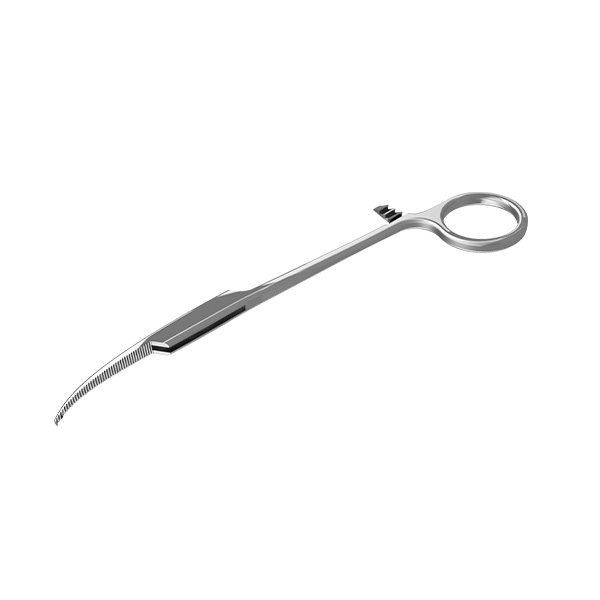
Engineering Superior Precision for Surgical Hemostatic Clamp Production
Hemostatic clamps are essential assets in the operating room, specifically designed to arrest hemorrhaging by temporarily blocking blood flow to a vessel with controlled pressure. While these instruments appear straightforward, their production requires dedicated manufacturing process, strategies and cutting tools. To ensure clinical safety and long-term reliability, the fabrication process must prioritize absolute repeatability, flawless surface integrity and micron-level accuracy.
Constructed primarily from hardened Stainless Steels and specialized surgical alloys, these tools must withstand rigorous sterilization protocols without losing their efficiency. Our high-precision micro-machining technologies are tailored to the unique demands of medical instrument fabrication, ensuring excellence from the most delicate jaw serration to the central pivot system.
Navigating the Complexities of Medical-Grade Instrument Fabrication
The performance of a surgical clamp is determined by its tactile feedback, locking reliability, and perfect jaw alignment. In the high-stakes environment of surgery, there is no room for mechanical hesitation. Achieving this level of quality presents several distinct machining challenges:
- Intricate Jaw Geometries: Tapered and curved profiles that necessitate high multi-axis stability.
- Micro-Serration Accuracy: Maintaining tight-tolerance tooth patterns for dependable grip.
- Articulating Components: High-accuracy machining for seamless hinge and ratchet interaction.
- Material Toughness: Efficiently processing wear-resistant alloys like 420 and 17-4PH Stainless Steel.
Specialized Milling for Micro-Serrations and Grip Integrity
The functionality of a hemostatic clamp rests on its serrated profile. These teeth must provide a secure grip while remaining "atraumatic" - minimizing damage to sensitive biological tissues.
Our specialized profiled endmills solutions provide:
- Sharp, Defined Profiles: Exacting control over serration pitch and depth for consistent performance.
- Burr-Free Finishes: Significant reduction in secondary manual deburring, speeding up the production cycle.
- Batch Consistency: High-performance end mills designed to maintain tolerances across thousands of units.
Achieving Mechanical Fluidity in Hinge and Ratchet Assemblies
The pivot and locking mechanism serve as the mechanical heart of the instrument. For the surgeon, the "feel" of the clamp as it clicks into place is a critical indicator of security.
To achieve this, our tooling focuses on:
- Precision Hole Making: High-precision drilling of pivot points to ensure smooth, wobble-free articulation.
- Clean Ratchet Milling: Crisp cutting of the locking teeth to ensure the clamp remains securely engaged under tension.
- Friction Reduction: Superior surface finishes on mating parts to prevent binding or premature wear.
Optimizing Surface Integrity for Sterility and Biocompatibility
Medical instruments must meet the highest standards of hygiene. Any surface irregularity or micro-fissure can become a reservoir for contaminants or a starting point for corrosion.
Our advanced tooling technologies protect the integrity of the base material through:
- Thermal Management: The advanced integrated cooling technology helps prevent work hardening and preserve the metallurgical properties of the steel.
- Enhanced Chip Evacuation: Together with the integrated cooling channels, the polished flute designs prevent chip recutting, essential for the gummy nature of some surgical alloys.
- Passivation-Ready Surfaces: Exceptional surface finishes that streamline the final chemical passivation and polishing stages.
Mastering Thin-Wall Stability in Lightweight Surgical Designs
Modern surgical trends favor lightweight, ergonomic instruments that enhance a surgeon's tactile sensitivity. However, machining the thin-walled sections of a clamp jaw introduces the risk of deflection and chatter vibration.
Our specialized geometries solve these issues by:
- Reducing Radial Pressure: Minimizing the forces that cause part deformation during the finishing pass.
- Vibration Dampening: Maintaining structural stability even during high-speed machining of delicate instrument zones.
Scalable Manufacturing Solutions for High-Volume Medical Tooling
Because hemostatic clamps are high-volume consumables in the healthcare sector, manufacturing efficiency is as important as precision. Our tooling solutions are engineered to thrive in automated production environments, offering:
- Extended Tool Longevity: Maximizing uptime when milling abrasive medical-grade Stainless Steels.
- Optimized Cycle Times: Faster metal removal rates without sacrificing the tight tolerances required by healthcare regulations.
- Process Reliability: Stable, predictable performance that integrates seamlessly into highly regulated quality management systems.
From the first cut of the jaw to the final fit of the ratchet, we provide the cutting-edge expertise required to produce world-class surgical instruments.
Do you need any advice from us? Contact us here!